| Veranstaltungsbeginn: |
Freitag, 13. März 2026 19:00 |
| Veranstaltungsende: |
Sonntag, 15. März 2026 16:30 |
| Lehrer: |
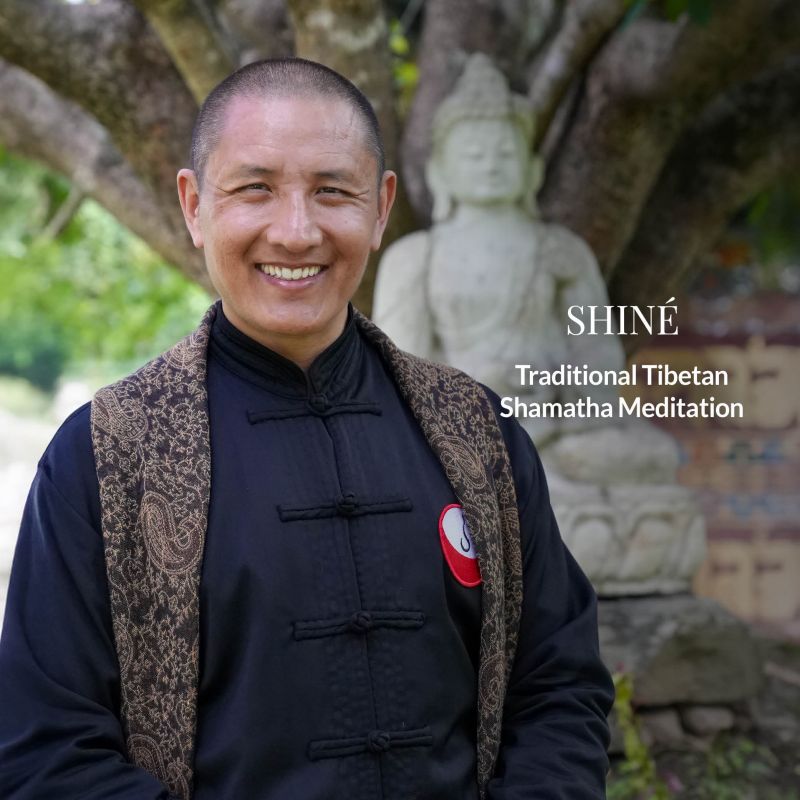
Tulku Lobsang Rinpoche |
| Ort: |
Kungfu Templet
Jyllingevej 71
DK-2720 Vanløse
Copenhagen
Denmark |
| Kontakt: |
Stan Howaniak
Tel. (+45) 52 16 64 64
buddha.cph@gmail.com |
| Veranstalter: |
Kungfu Templet (Copenhagen Kungfu Temple) |
| Weitere Details: |
PRICE:
- 2,150 DKK / € 290 (Friday, Saturday & Sunday)
- 250 DKK / € 35 (Friday Lecture)
- 1,000 DKK / € 135 One day (Saturday or Sunday)
- 1,900 DKK / € 255 (Saturday & Sunday)
Important Notice:
- Participants must arrange their own accommodation.
- International bank transfers are accepted only until 6 March 2026.
- Participants registering after this date must pay in cash upon arrival.
- We accept Danish Krone (DKK) and Euro only, in the exact amount.
GENERAL INFORMATION:
- Tulku Lobsang Rinpoche teaches in English. No translation will be provided.
Schedule:
Friday, 13 March – Introductory Lecture / Intensive Seminar Day 1
18.30 - 18.55: Check-in
19.00 - 20.30: Teaching | Practice
20.30 - 20.45: Break
20.45 - 21.15: Q&A
Saturday, 14 March – Intensive Seminar Day 2
09.30 - 09.55: Check-in
10:00 - 11:15: Teaching | Practice
11:15 - 11:30: Break
11:30 - 12:45: Teaching | Practice
12:45 - 14:15: Lunch Break
14:15 - 15:15: Teaching | Practice
15:15 - 15:30: Break
15:30 - 16:30: Teaching | Practice
Sunday, 15 March – Intensive Seminar Day 3
09.30 - 10.00: Check-in
10:00 - 11:15: Teaching | Practice
11:15 - 11:30: Break
11:30 - 12:45: Teaching | Practice
12:45 - 14:15: Lunch Break
14:15 - 15:15: Teaching | Practice
15:15 - 15:30: Break
15:30 - 16:30: Teaching | Practice
|
| Preis: |
|
| FAQs & Informationen: |
Hier klicken |
What to Bring
• Wear comfortable clothes.
• Bring a blanket or yoga mat and a cushion for floor seating.
Location & Transport
• The venue is about 6 km from central Copenhagen.
• Accessible by Metro, S-train, and city buses. Use www.rejseplanen.dk for routes (available in English & German).
• Parking is available nearby. On Fridays, there’s a 3-hour limit; no restrictions on weekends. |
Wenn du benachrichtigt werden möchtest, sobald eine Anmeldung für diese Veranstaltung möglich ist, klicke bitte auf den untenstehenden Button.
This event is not organised by Nangten Menlang International. For booking, please contact buddha.cph@gmail.com
Phowa, the Yoga of Transference, is a Tibetan Buddhist practice that teaches how to consciously guide the mind during death, the intermediate state (Bardo), and rebirth. The main purpose of Phowa is to learn how to direct consciousness during these powerful transitions. Instead of being carried away by fear or confusion, death becomes a moment we can work with and use for transformation.
The essential meaning of Phowa is the transfer of our three main disturbing emotions – ignorance, attachment, and anger – into the wisdom of the Three Buddha Bodies. At the time of death, ignorance is transferred into a non-conceptual state of mind, the Dharmakaya, or Truth Body. During the Bardo, attachment is transferred into a state of great bliss and clarity, the Sambhogakaya, or Enjoyment Body. At the time of rebirth, anger is transferred into clear awareness and compassionate expression, the Nirmanakaya, or Emanation Body. In this way, ignorance, attachment, and anger are transformed through transfer into non-conceptual awareness, great bliss, and clear light mind.
Phowa also teaches how to use death itself as support on the path. Samsara is compared to a vast ocean, and we are like swimmers moving within it. Death arises like a powerful wave. Without training, this wave can overwhelm us. Through Phowa, we learn how to move with the wave and use its force to carry us toward the land of nirvana. Death then becomes the vehicle that guides consciousness toward awakening.
In this intensive seminar, Tulku Lobsang Rinpoche will explain Phowa with a strong focus on the principle of transfer. He will guide participants to understand how consciousness moves through death, Bardo, and rebirth, and how these stages relate to the Three Buddha Bodies. Through explanation and guided practice, participants will develop familiarity with Phowa and cultivate a calmer, more confident, and more conscious relationship with death – for themselves and for others.